From Moodboard to Wedding Visualization in 10 Minutes Using AI.

Exploring the 2026 trend of meadow-inspired floral installations with Flux AI.
AI is no longer just a trendy tool. It’s changing the way wedding designers think, create, and experiment.
For me, AI is not simply about generating beautiful images. It’s about expanding creative boundaries, developing artistic vision, and testing ideas faster than ever before.
Today, luxury wedding design is moving toward more organic, sculptural, and immersive aesthetics. One of the strongest 2026 wedding trends is the rise of meadow-inspired floral installations — designs that feel alive, textural, asymmetrical, and emotionally connected to nature.
We’re seeing more:
sculptural greenery
moss textures
wild grass installations
organic movement
living landscape-inspired decor
mirrored and metallic structures combined with natural elements
And this is exactly where AI wedding visualization becomes incredibly powerful.
Why I Use AI in Wedding Design
I use AI for much more than content creation.
I use it to:
train my eye and creative direction
develop unique wedding concepts
test new artistic ideas
explore multiple design directions quickly
understand what may emotionally connect with a client
create client-ready visualizations without waiting for a sketch artist or 3D rendering team
Instead of spending days waiting for revisions, I can now generate multiple luxury wedding concepts in minutes.
Creating a Sculptural Greenery Wedding Concept
For this experiment, I wanted to explore a wedding design using:
sculptural greenery
organic meadow-inspired florals
steel and mirrored structures
asymmetrical compositions
architectural floral movement
Here is the moodboard that inspired the concept.
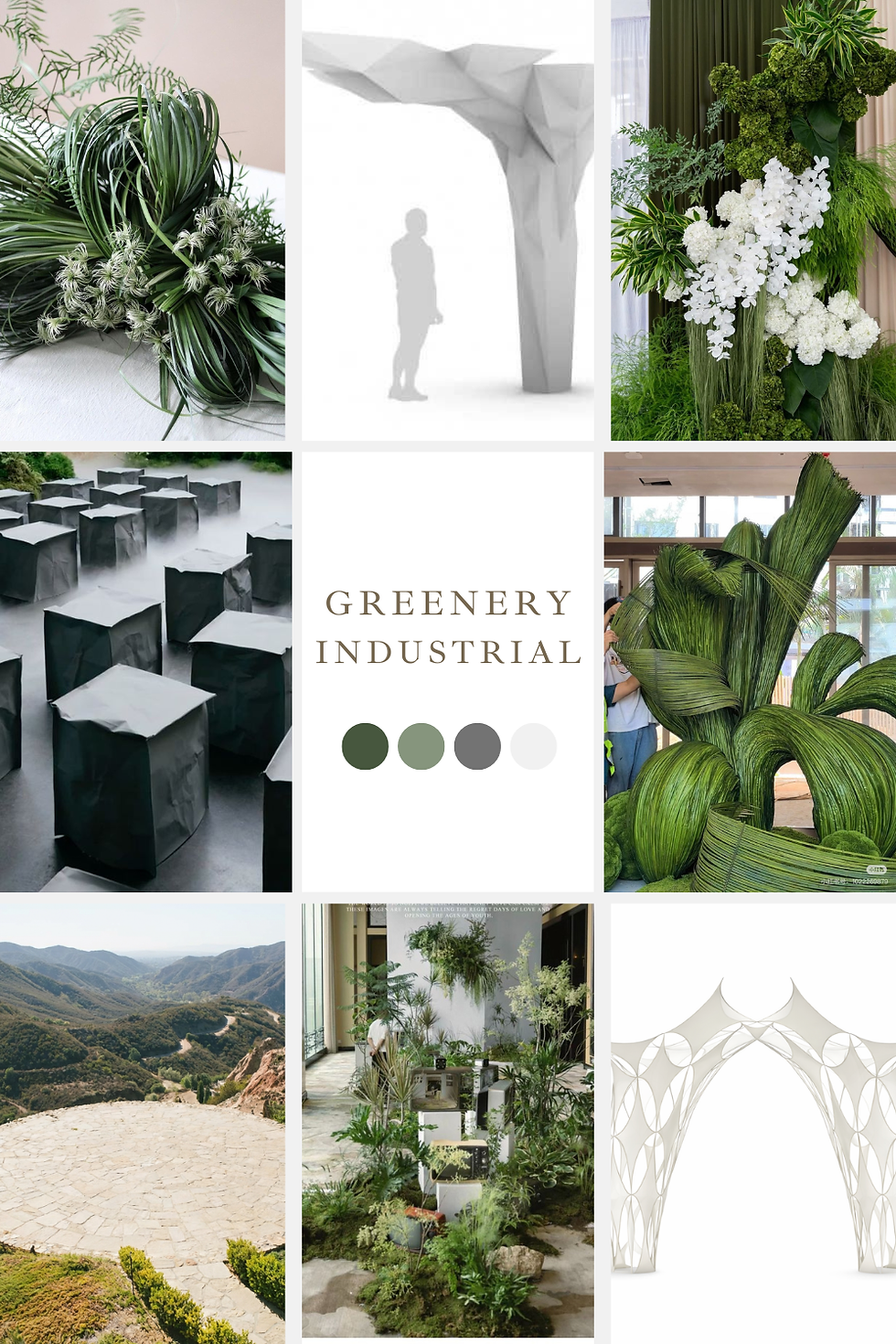
I also created the ceremony structure itself using AI.The goal was to experiment with different floral recipes while keeping the same overall artistic direction.

How AI Training Works
One of the biggest advantages of AI wedding visualization is that you can train the system to understand your aesthetic.
This is where many designers misunderstand AI.
AI is not random magic.You teach it.
I upload references that match the visual language I want:
textures
floral styles
structures
lighting
composition
atmosphere
The AI studies these references internally and learns the patterns behind the style.
In other words, I train the system to better understand my creative vision.
My Workflow Using Flux AI
This entire process happens incredibly fast.
Step 1 — Collect References in Pinterest
Approximate time: 15 minutes
I gather references that reflect the artistic direction I want to explore.

Step 2 — Train the AI Style
Approximate time: 10 minutes
I upload references into Flux AI so the system can learn the visual style.
Step 3 — Write the Prompt
Approximate time: 1 minute
I describe:
the structure
floral recipe
materials
atmosphere
lighting
composition "Wedding ceremony on the top of the mountains. Metallic dramatic transparent structure full of dramatic greenery is an eye stopper. There is an mirror aisle leading to the structure with 5 rows of 10 metallic square ottomans each side of the aisle. There are random grass arrangement between the ottomans. There are 2 lush grass runners with white flowers each side of the aisle"
Then I apply the trained style.
And within seconds, I receive multiple AI wedding visualizations.

The Power of AI Wedding Visualization
The most exciting part is speed.
Every 20 seconds, I can generate four new luxury wedding concepts.
This completely changes the creative process.


Instead of being limited to one idea, I can quickly explore:
wedding ceremony designs
wedding reception concepts
floral installations
architectural structures
stage designs
luxury tablescapes
immersive guest experiences
AI allows me to test ideas that would normally take days or weeks to visualize.
AI Is Changing the Future of Wedding Design
The wedding industry is entering a new era.
Designers who learn AI now will be able to:
move faster
communicate ideas more clearly
create stronger presentations
stand out in the market
develop signature aesthetics
close clients faster with visual storytelling
AI will never replace creativity.
But it will dramatically amplify designers who know how to use it.
Learn AI for Wedding Designers
This is exactly the workflow I teach inside my online program, AI for Wedding Designers.
Inside the course, I show how to:
train AI to your signature style
create luxury wedding concepts
generate client-ready visualizations
use Flux, ChatGPT, Midjourney, and other AI tools professionally
speed up your workflow without losing artistic identity
If you want to explore AI wedding visualization and create concepts faster than ever before:
What Happened After the First Generation
In about 30 minutes, I created around 32 different wedding design options based on the same moodboard.
And honestly, I couldn’t stop.
Once you try this workflow, it becomes almost impossible to create only one version. You want to test more shapes, more floral recipes, more structures, more atmospheres, more layouts.
For example, after the ceremony concept, I created several wedding reception variations using the same moodboard direction: sculptural greenery, industrial materials, mirrored surfaces, metallic cubes, organic meadow textures, and architectural floral movement.
And this is only the first stage.


At this point, you are not creating final production drawings yet. You are testing the idea. You are exploring the visual direction. You are checking what feels strong enough to present to a client.
Once one concept is selected, you can go deeper:
refine missing areas
create additional angles
develop reception layouts
test tablescapes
adjust floral recipes
create close-ups
prepare client presentation visuals
You can try this yourself using AI Flux.
Or you can join my course AI for Wedding Designers, where I show step by step how I use these tools in real wedding design workflows — from idea to moodboard, from prompt to visualization, from concept to client presentation.


Comments